Rome Didn't Fall in A Day.


Objective Truth Exists and is Accessible to Everyone.

All Human Problems can be Solved with Enough Knowledge, Wealth, Social Cooperation and Time.


Photo: Rusty Peak, Anchorage, Alaska


Translate

Showing posts with label Risk. Show all posts

Sunday, June 26, 2022

Is Something Really Safe Because It Is Natural?

 A few years ago, a good friend, Alison Warn, posted a brilliant, concise FB comment about the safety and hazards from artificial and natural sources.  Here's Alison:

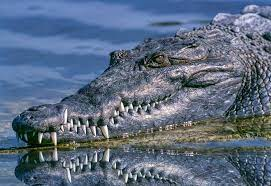
"Ahem: Ricin, Oleander, Hydrochloric Acid, Formaldehyde, Tuberculosis, Taipei Venom, Curare, Cyanide, Staphylococcus Aureus, Ebola, Arsenic, Methylmercury, Lead, Lionfish, Radon Gas, Saltwater Crocodiles.... need I go on?

Safety has nothing to do with source and everything to do with inherent properties such as chemical structure, radiation, germ virulence, or teeth. Some synthetic materials are indeed quite dangerous (sarin gas, anyone?) while others are harmless. Some natural materials are indeed quite harmless, while nature has also given us many of our most deadly poisons.

Being blinded by the source can be quite dangerous - it both leads us away from potentially lifesaving synthetic materials (such as promising new pharmaceuticals) and can lead to our discounting some very dangerous natural threats."

---

Whether something is safe or not has nothing to do with whether it is "natural" or not, and everything to do with its physical and chemical properties.  And something artificial is not necessarily any riskier than a natural substance.


Monday, October 24, 2011

On Progressive Risk-Taking

When I was a young driver, I discovered, to my delight, that the car was narrower than my perception from the driver’s seat.   I found that the car could fit through narrow spaces; I could thread the needle past obstacles in alleys and parking lots.  My confidence grew as I successfully navigated through difficult places.  Until, at last, the inevitable happened.  I tried to drive between a lamp-post and a pickup truck.  The car did not fit.

That’s the nature of progressive risk-taking.   In some situations, we receive no incremental feedback; no warning that things are about to go disastrously wrong.   Outcomes are discrete values of positive or negative, and repeated positive experience only encourages more risk-taking.   [Example: “Well, you didn’t get pregnant the LAST time….”]

A beautiful example of progressive risk-taking is the TV game show “Deal—or No Deal”.   There are 32 suitcases bearing prizes, and a highly skewed statistical distribution of prizes.  In the early rounds, it is a virtual certainty that the contestant will increase the mean (expected) value of his prize by guessing and eliminating suitcases of low value.   Players gain confidence from their early success.  But abruptly, and without warning, the game changes.   Suitcases with high value are inevitably eliminated.   The mean value of the prize declines.   The player, filled with confidence from the early rounds, persists.  Generally, he plays to destruction, to the absolute end of the game where the statistical chance of a substantial prize is very low.   Early success is seductive, and it encourages poor decisions in absolute defiance of all evidence and reason.

Progressive risk-taking is exacerbated when operating outside of the envelope of previous experience.

On a cold Florida morning in 1986, mission controllers decided to launch the Space Shuttle Challenger, despite objections from project engineers.     With a history of 50 successful launches: "What could go wrong?"   But the temperatures that day were without precedent in the shuttle program, and outside of the range for which components had been tested.   Outside of the envelope of experience, the prior record of success is meaningless; the probability of failure cannot be calibrated.  The result was a disaster which scarred a generation, and devastated the American space program.

Humanity is now engaged in a great experiment, outside of the envelope of previous experience.   Near the end of October, 2011, world population will exceed 7 billion people, as compared to about 1.6 billion people in the year 1900.   To date, human ingenuity and technology have enabled mankind to feed and shelter the growing population.   Within the past 50 years, in fact, standards of living, lifespan and health have improved dramatically, coincident with industrialization and rising per capita GDP.  

However, the forecast population is outside of the envelope of previous experience.  Some of the technologies that have enabled the current population, such as irrigation from fossil aquifers, are not sustainable.   We cannot simply assume that technology will always solve the problems of growing population, simply because we have been successful in the past.   There will come a point where we can no longer squeak through the gap.